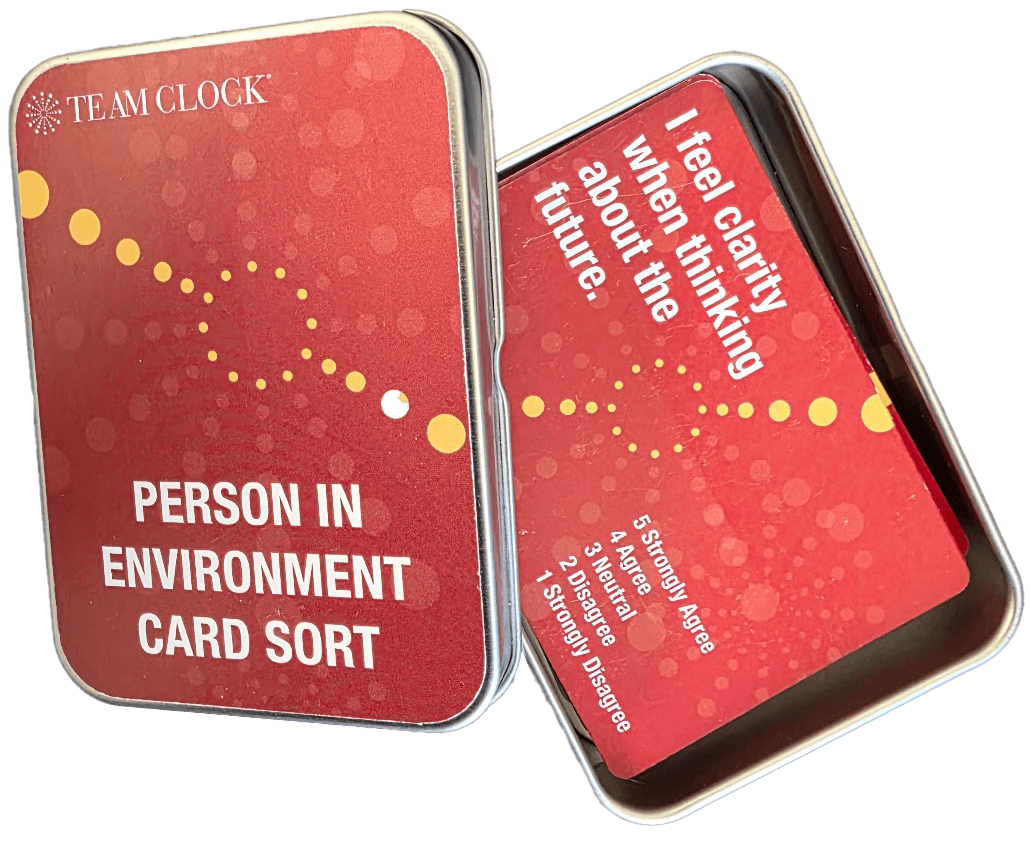
+ $24.95
Latest Release
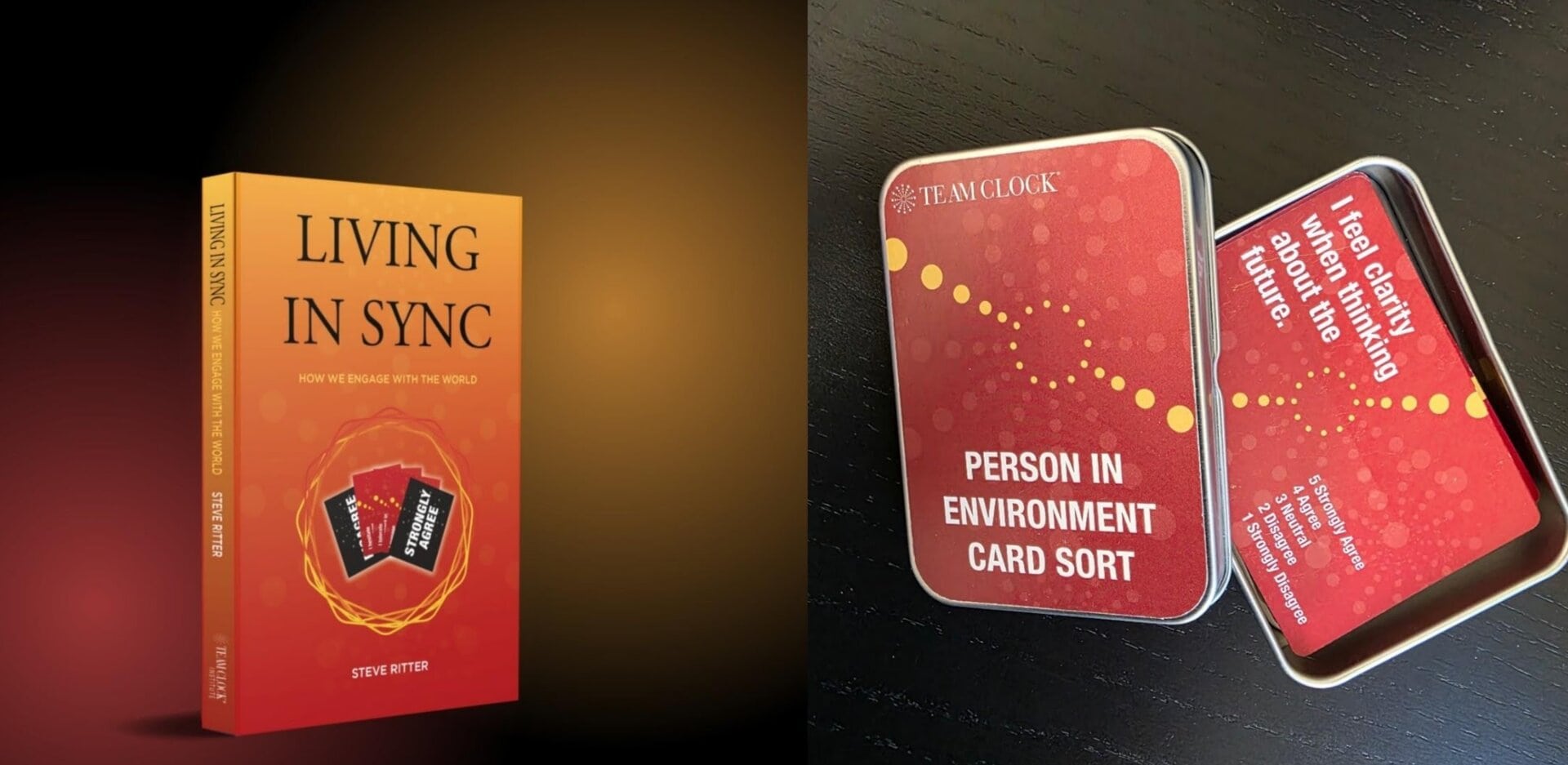
Living In Sync:
How We Engage with the World
There’s no universal elixir for life’s challenges – because your life isn’t like anyone else’s.
What shapes your growth isn’t just what happens to you, but how you manage these circumstances and engage with the environment around you.
Living in Sync explores how human development evolves in cycles—where each challenge, each relationship, and each stage of change offers an opportunity for growth. Drawing on the core principles of the Person-in-Environment model, this book invites you to discover your personal themes and harness your unique patterns of navigating life.
Rather than a formula, this is a guide to your own rhythm – an ever-widening spiral of mastery built on values, goals, and real-world problem-solving. The work of evolving isn’t linear. But it is learnable. And it begins with understanding how you and your environment shape one another.
Steve Ritter
Author
In 2009 after thirty years of development, the Team Clock Institute published a methodology for measuring the wellness of workplaces, teams, and relationships. In 2011, the United States Patent and Trademark Office granted us a trademark. A decade later, our assessment tool achieved research validation in a collaborative study partnering the data science programs from Elmhurst University and Carthage College. In addition to validating the tool, their summary cited a 98% predictability of positive outcomes between pre- and post-metrics when clients implement recommended actions.
The first and third books of this series focused on team effectiveness and workplace culture. Sandwiched between these publications was a book about interpersonal relationships. All three of these were born from a clinical model of thinking about the way people move through the world: No matter their circumstances, people tend to establish core values and direction, learn how to connect with others, stretch themselves to grow, and adapt to the changes that each cycle brings.
Human development evolves in cycles as we learn to interact with our environment more effectively with each stage of growth. In an ever-widening spiral of mastery, we build a platform of values, goals and problem-solving ability. This foundation provides the guideposts to interact effectively with others. Over time, the partnerships we develop lead to growth and change. How we manage each stage of change in our lives strengthens the foundation for future trials.
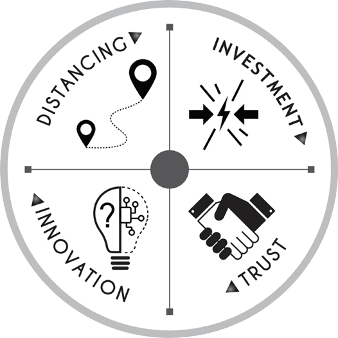
There are four repeating stages of personal evolution where the outcome of either our struggle or mastery is inherited from the previous stage and delivered to the next stage. Because the cycling is continuous throughout our life, we are gifted with countless opportunities to shape our own growth and increase our repertoire of coping skills – as long as we are willing to keep moving through the current stage.
This book comes with a deck of cards. You are encouraged to perform the card sort exercise regularly, as it is an easy way to see how you are doing with your individual growth and development. Your strengths will likely be obvious as you thoughtfully place the cards in piles based on whether you agree, strongly agree, disagree, strongly disagree, or feel neutral about the statement posed on each card.
The card sort exercise will also serve as a real-time wake-up call in revealing your areas for development: situations where you may be avoiding things, struggling or feel stuck. Like any assessment tool, the card sort exercise will shine a light on strengths, vulnerabilities, and opportunities – but importantly, it won’t tell you what to do about it.
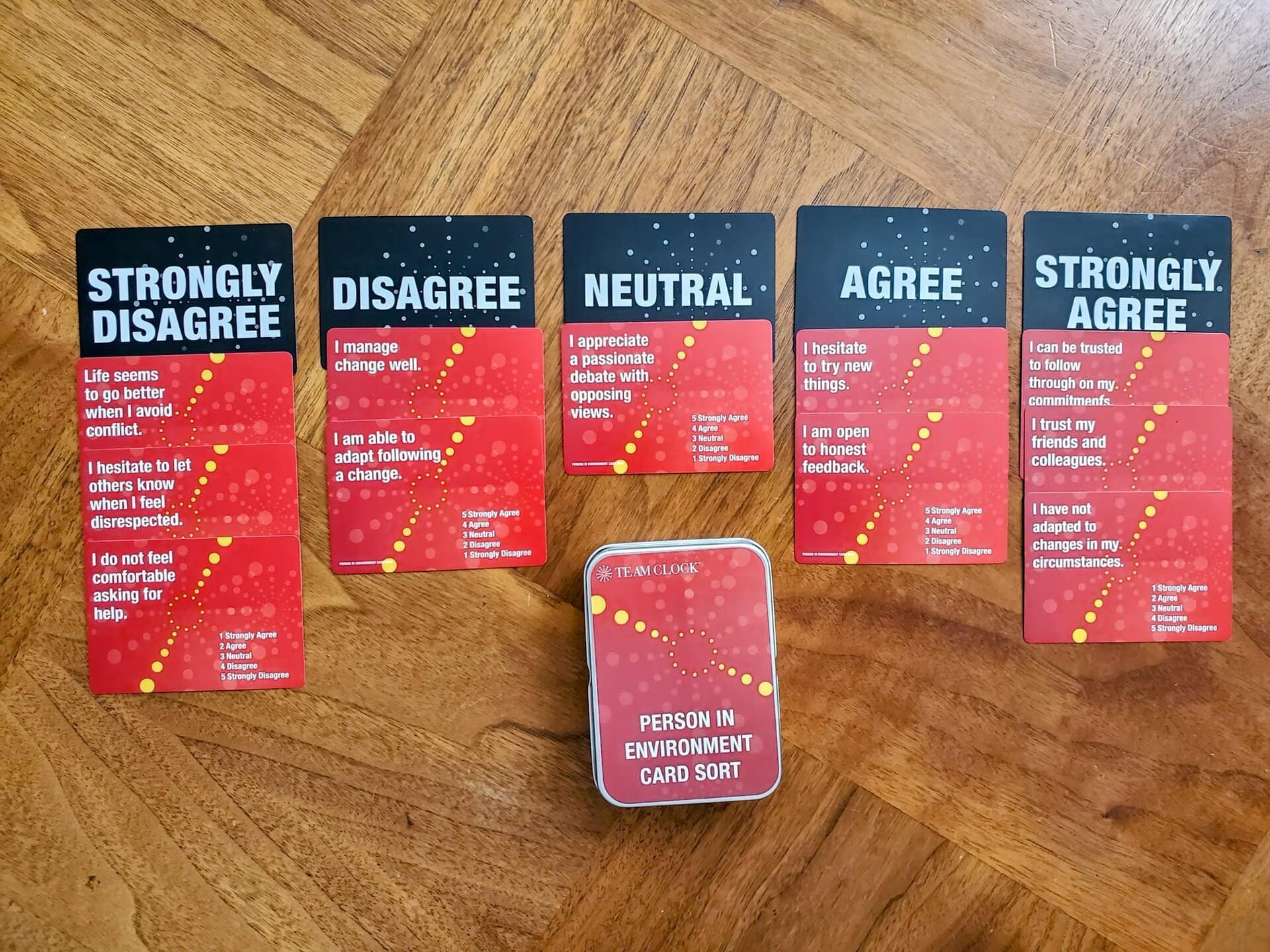
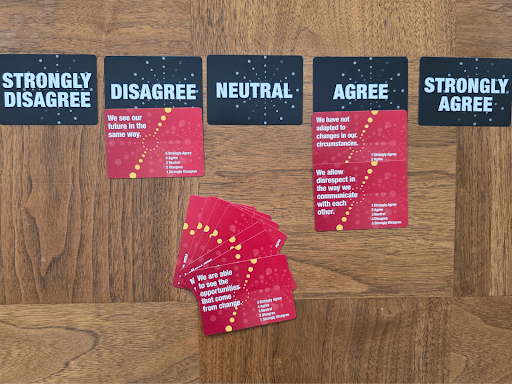
Whether you choose to do the card sort by yourself or if your process is facilitated by a wellness partner, the card sort exercise is unlikely to reveal any big surprises. More likely, the experience of ranking each card will corroborate themes and patterns that are already familiar to you. Even if we don’t want to recognize it, most of us are acutely aware of the places in life we tend to stumble. What we do with that information usually comes down to whether the cost of repeated stumbles is great enough to warrant making a change.
Imagine some of the possible outcomes. After completing the card sort exercise, you discover (or are, once again, reminded that):
- You tolerate disrespect from others.
- You have made choices that don’t align with your values.
- The discomfort of conflict leads you to not stand up for yourself.
- You tend not to follow through with commitments.
- You fear the vulnerability of closeness.
- You settle for ‘good enough’ instead of trying new things.
- Your anxiety becomes overwhelming during periods of change.
- You find it difficult to bounce back after a disappointment.
Steve Ritter
Author
Steve’s unique blend of training and experience in the worlds of human resources, organizational development, and clinical psychology inspired the creation of the Team Clock® methodology, an approach that merges the professional and clinical fields to empower growth of teams in a spectrum of industries from business to sports to education.
Other Books